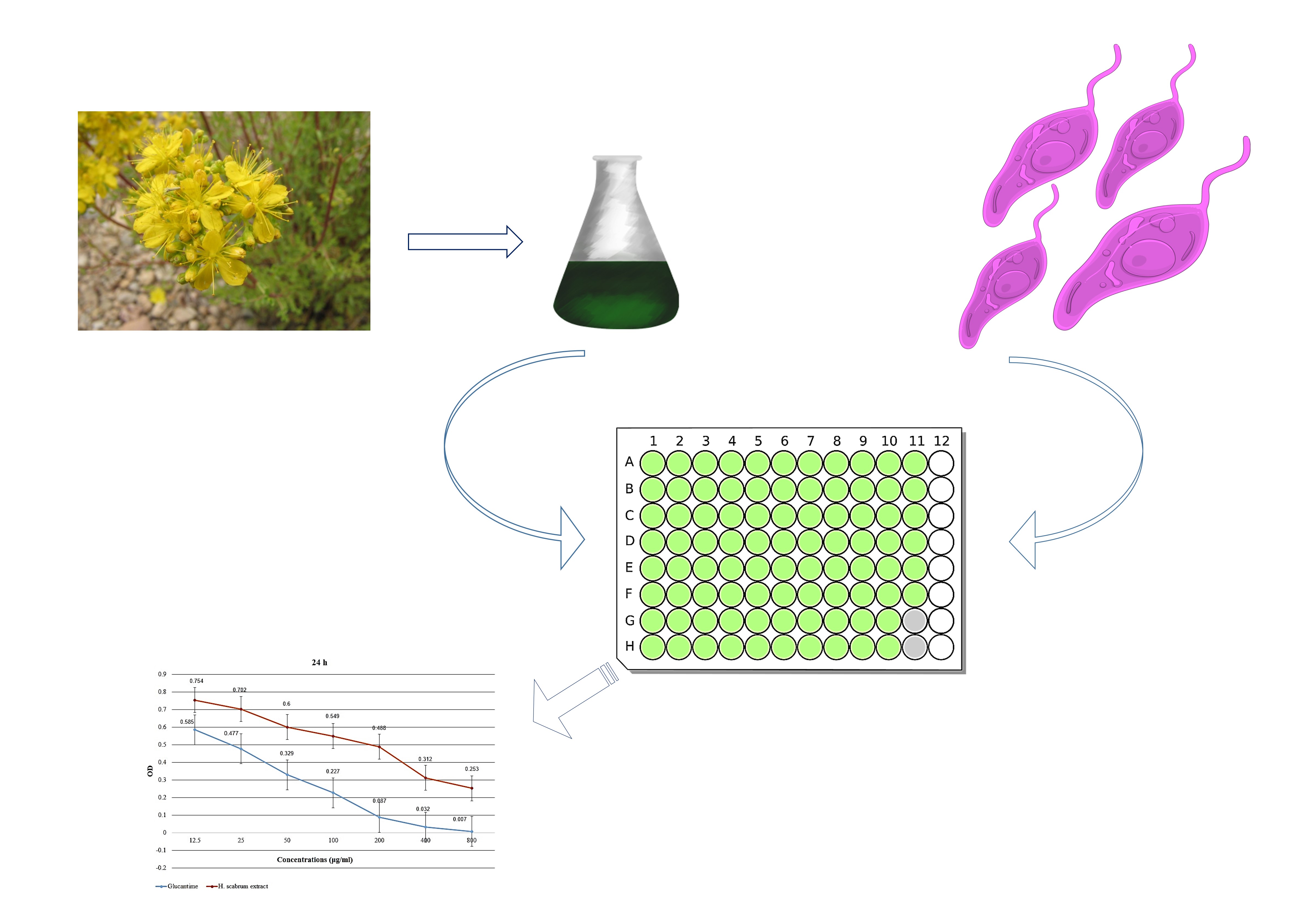
Leishmaniasis is a growing global health concern, and to date, no definitive vaccine exists for this disease (Mann et al. 2021). Although CL is often considered a self-limiting disease, the lesions associated with it can lead to secondary infections, which may slow the healing process (de Vries and Schallig 2022). In addition, numerous reports highlight issues such as relapse, incomplete treatment, and the emergence of drug resistance of Leishmaniasis (Domagalska et al. 2023). As a result of the challenges associated with current treatments, many researchers are exploring the development of cost-effective drugs that offer higher efficacy and fewer side effects (Altamura et al. 2022). One approach recommended by the World Health Organization (WHO) is the utilization of plants and natural products in the treatment of Leishmaniasis (Cortes et al. 2020, Gervazoni et al. 2020). In recent years, there has been a growing trend among people in society towards the use of herbal medicines. This increased acceptance, combined with numerous studies confirming the antimicrobial properties of plants and their extracted compounds, has led researchers to explore the potential of herbal medicines as viable treatment options for various diseases, including Leishmaniasis (Cortes et al. 2020, Gharirvand Eskandari et al. 2020).
The study by Keser et al. (2020) found that water and ethanol extracts of H. scabrum flowers showed stronger antimicrobial activity when combined with other plant extracts against various bacterial strains. These findings suggest that H. scabrum extract can enhance the antimicrobial activity of other natural extracts, making it a promising candidate for future research in the development of synergistic natural remedies (Keser et al. 2020).
The present study investigated the anti-leishmanial activity of the H. scabrum extract, revealing significant findings. The H. scabrum extract exhibited the highest anti-leishmanial activity at 72 hours, with an IC50 value of 245.47 µg/ml. Conversely, the H. scabrum extract demonstrated the lowest anti-leishmanial efficacy at 24 hours, with an IC50 value of 85.11 µg/ml. The results of this study are consistent with those of other studies that have evaluated the anti-leishmanial activity of various plant extracts. A similar study has investigated the effects of extracts from H. scabrum on different Leishmania species, including L. major, L. tropica, and L. infantum/donovani. Extracts from H. scabrum demonstrated significant leishmanicidal activity, with no living Leishmania parasites found at concentrations of 100 µg/mL or higher. This suggests a potent inhibitory effect on the parasites, particularly those that are resistant to standard treatments (ÖZPINAR, Culha et al. 2024). The cytotoxicity of these extracts was assessed using the XTT method on human fibroblast cell lines (WI-38). Importantly, the concentrations effective against Leishmania did not exhibit cytotoxic effects on human cells, indicating a selective action against the parasites (ÖZPINAR, Culha et al. 2024). While the precise mechanisms by which H. scabrum extracts exert their effects on Leishmania are still under investigation, several hypotheses can be drawn from existing literature, including the disruption of metabolic pathways and the induction of apoptosis (Ozpinar et al. 2024).
The study by Naserifar et al. (2021) found that the aqueous extract of Scophularia straiata had a proper anti-leishmanial activity, eliminating amastigotes within macrophages and killing promastigotes in the medium at a concentration of 25 µg/mL (Naserifard et al. 2013). In another study, Gharirvand-Eskandari and Doudi (2016) evaluated the anti-leishmanial effects of the extract and essential oil of Medicago lupulina leaves on L. major promastigotes. They reported that the IC50 of glucantime was equal to 19 µg/mL after 48 hours, while the IC50 values for the alcoholic extract and essential oil of this plant after 48 hours were equal to 130 and 340 µg/mL, respectively (Gharirvand Eskandari and Doudi 2016). This suggests that the anti-leishmanial activity of H. scabrum extract is comparable to that of other plant extracts. The potential synergistic effects of combining H. scabrum extract with other natural extracts or compounds warrant further investigation to enhance its therapeutic efficacy and reduce the risk of drug resistance. In the study conducted by Soudi et al. (2017), it was found that the root extract of Echinacea purpurea has a significant and irreversible leishmanicidal effect on L. major promastigotes in vitro, with effective concentrations around 50 mg/mL, suggesting its viability for clinical applications (Sooudi et al. 2007). Additionally, previous studies highlighted that both Allium hirtifolium and Ziziphus spina-christi extracts possess strong inhibitory effects on the growth of L. major promastigotes, with IC50 values of 87 µg/mL and 112 µg/mL, respectively. These findings underscore their potential as effective herbal treatments for leishmaniasis (Amanzadeh et al. 2006). The systematic review of herbal extracts as antileishmanial agents highlights a promising strategy for developing effective treatments for leishmaniasis. Key findings regarding specific extracts include: Artemisia aucheri extract exhibited an IC50 value of approximately 5.9 µg/mL against L. major. The Ferula assa-foetida extract demonstrated comparable efficacy with an IC50 of around 7.5 µg/mL. Also, Gossypium hirsutum extract showed the highest potency among the evaluated extracts, achieving an IC50 of 3.6 µg/mL. These findings underscore the potential of these herbal extracts as viable therapeutic options for combating leishmaniasis, warranting further investigation into their mechanisms and clinical applications (Gharirvand Eskandari et al. 2020). The findings showed that the H. scabrum extract exhibited anti-leishmanial efficacy and hypericin was principal compound, which is consistent with a similar study accomplished by Singh et al (Singh et al. 2015). In the mentioned study, researchers examined the effects of hypericin, an active compound derived from Hypericum perforatum, which belongs to the same family as H. scabrum, on L. donovani. The hypericin was identified as a natural compound with inhibitory properties against spermidine synthase (LdSS), an enzyme associated with L. donovani. This compound demonstrated the ability to inhibit the activity of the recombinant LdSS enzyme, leading to the death of L. donovani at an IC50 of 18 µM under laboratory conditions. In vivo assessments revealed that treatment with hypericin resulted in a significant reduction in spermidine levels in Leishmania promastigotes. Specifically, spermidine levels decreased from a normal value of 1 ± 34 µM to 0.1 ± 1 µM after 24 hours of hypericin treatment, indicating the target of the inhibitory action. Furthermore, hypericin treatment was associated with a decrease in trypanothione levels, which dropped from 54 ± 317 µM in the normal state to 9 ± 39 µM after 24 hours of treatment. In contrast, glutathione levels increased from 206 ± 17 µM in the normal state to 249 ± 12 µM following hypericin treatment. Additionally, elevated levels of reactive oxygen species were observed in L. donovani following hypericin exposure (Singh et al. 2015).
The findings of this study highlight the potential of the H. scabrum extract as a promising anti-leishmanial agent, particularly when used at higher concentrations and for longer periods. The extract's ability to inhibit Leishmania sp. growth and survival, along with its ability to induce morphological changes, suggests that it could be valuable anti-leishmanial treatments. In vivo studies are essential to validate these findings and to fully explore the therapeutic potential of H. scabrum extracts in the effective treatment of leishmaniasis. Furthermore, comprehensive investigations into the specific mechanisms of action are critical for the development of innovative treatment strategies utilizing these natural products.